
Gluten, Zonulin, and Autoimmune Disease
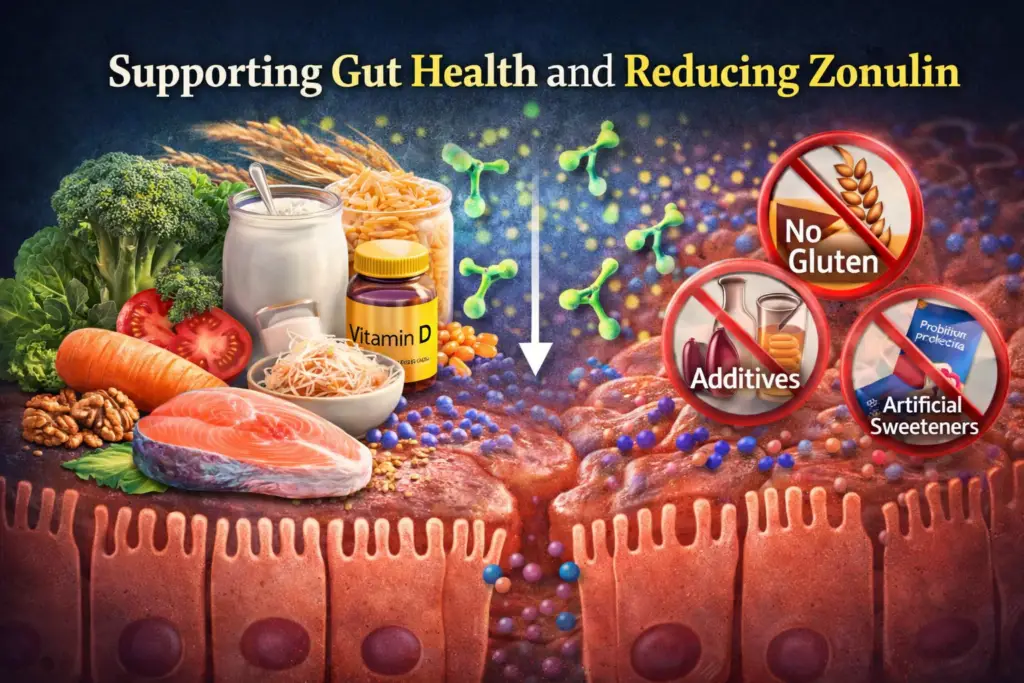
What Can Be Done to Reduce Zonulin and Support the Gut Barrier?
We ventured fairly deep into the biology in the previous article. For readers without a background in biology, here is the simple version of what you need to know.
Scientists have identified a molecule called zonulin that helps regulate how tightly your intestinal cells are connected. These cells form a barrier between the contents of your digestive tract and your bloodstream. When the connections between those cells loosen, substances that normally remain inside the gut can pass into the bloodstream. This condition is commonly referred to as increased intestinal permeability, or more informally, “leaky gut.”
If you would like a deeper explanation of this process, I recommend reading the previous articles in this series.
In the last article, we explored how gluten can activate a signaling pathway involving zonulin. When zonulin levels rise, the tight junctions between intestinal cells loosen, allowing larger molecules to pass through the intestinal barrier [1]. Some researchers believe this increased permeability may play a role in autoimmune diseases.
This concept remains controversial. Some physicians strongly support the role of intestinal permeability in disease, while others are more cautious in how the concept is interpreted. Nevertheless, research over the past two decades suggests that intestinal barrier dysfunction may be associated with several autoimmune conditions, including celiac disease, type 1 diabetes, inflammatory bowel disease, and possibly rheumatoid arthritis [2].
This naturally raises an important question: Is there anything people can do to support the intestinal barrier and potentially reduce zonulin activity?
The answer appears to be yes, although the science is still evolving.
Removing Gluten When It Triggers Symptoms
The most obvious step—and the one most strongly supported by research—is removing gluten if it clearly triggers symptoms or inflammation.
Gluten has been shown to activate the zonulin pathway, particularly in individuals with genetic susceptibility [3].
Gastroenterologist Dr. Alessio Fasano, who helped discover the zonulin pathway, explains:
“Gliadin, a component of gluten, triggers zonulin release and increases intestinal permeability in susceptible individuals.” [3]
For individuals with celiac disease, removing gluten is essential.
However, some people without celiac disease also report improvements in autoimmune symptoms when gluten is removed from their diet. Several studies suggest that gluten-free diets may reduce inflammatory markers in certain autoimmune conditions, although results vary between individuals and diseases [4].
For example, some patients with rheumatoid arthritis report reduced joint pain and inflammation after eliminating gluten-containing foods. Gluten may not be the sole factor involved, but reducing exposure may lower immune activation in certain individuals.
Supporting the Gut Barrier
Another important approach is supporting the intestinal barrier itself. The cells lining the intestine require nutrients and beneficial microbial signals in order to maintain strong tight junctions.
Several dietary factors appear to support gut barrier function.
Fiber and Whole Plant Foods
Dietary fiber plays a critical role in gut health because it feeds beneficial bacteria in the microbiome. These bacteria produce short-chain fatty acids, including butyrate, which help maintain the intestinal barrier and regulate inflammation [5].
Microbiome researcher Dr. Justin Sonnenburg notes:
“Short-chain fatty acids produced by gut microbes help maintain the integrity of the intestinal lining and support immune balance.” [5]
A diet rich in vegetables, fruits, legumes, and whole plant foods supports this microbial ecosystem.
Fermented Foods
Fermented foods such as yogurt, kefir, sauerkraut, kimchi, and traditionally fermented sourdough breads contain beneficial microbes that may support microbiome diversity.
A healthy and diverse microbiome appears to play an important role in maintaining intestinal barrier function and regulating inflammatory responses [6]. Some research suggests that probiotic bacteria may help strengthen tight junction proteins within the intestinal lining.
Omega-3 Fatty Acids
Omega-3 fatty acids—found in fatty fish, flaxseed, and walnuts—have well-established anti-inflammatory properties.
In individuals with rheumatoid arthritis, omega-3 supplementation has been shown to reduce inflammatory markers and improve joint symptoms [7]. While omega-3 fats do not directly block zonulin, they may help regulate inflammatory pathways that are activated when intestinal permeability increases.
Vitamin D
Vitamin D plays an important role in both immune regulation and intestinal barrier function. Low vitamin D levels have been associated with increased intestinal permeability and higher autoimmune disease activity [8].
Maintaining healthy vitamin D levels through sunlight exposure, diet, or supplementation may help support immune balance.
Avoiding Ultra-Processed Foods
Another area receiving increasing scientific attention is the effect of ultra-processed foods on gut health.
Highly processed foods often contain additives, emulsifiers, and refined sugars that may alter the gut microbiome and disrupt the intestinal barrier. Some studies suggest that certain food additives can disturb mucus layers in the intestine and increase gut permeability in animal models [9].
While more research is needed in humans, reducing ultra-processed foods and focusing on whole foods may support overall gut health.
The Microbiome Factor
The gut microbiome may be one of the most important regulators of intestinal permeability.
The digestive tract contains trillions of microorganisms that interact constantly with the immune system and intestinal lining. These microbes help:
- strengthen tight junctions
- regulate immune responses
- break down dietary compounds such as gluten peptides
Conversely, imbalances in microbial communities—often called dysbiosis—may increase inflammation and intestinal permeability [10].
Research in this field is advancing rapidly, and many scientists now believe the microbiome plays a major role in autoimmune disease risk.
Rheumatoid Arthritis and Diet
Rheumatoid arthritis (RA) is a chronic autoimmune disease in which the immune system attacks the joints.
Although genetics play a role, environmental factors—including diet—can influence disease activity.
Some research suggests that anti-inflammatory dietary patterns, such as the Mediterranean diet, may improve symptoms in certain patients [11]. These diets emphasize vegetables, fish, olive oil, legumes, and minimally processed foods.
If someone with rheumatoid arthritis finds that removing gluten improves their symptoms, it may be worth exploring this dietary change under the guidance of a healthcare professional. However, it is important to remember that RA is a complex disease, and diet is only one piece of the puzzle.
A Balanced Perspective
The science surrounding gluten, zonulin, and intestinal permeability continues to evolve.
What research currently suggests is that:
- gluten can activate the zonulin pathway in susceptible individuals
- intestinal permeability may contribute to autoimmune disease
- diet, microbiome health, and inflammation all influence gut barrier function
At the same time, it is important to avoid simplistic conclusions. Gluten is not harmful for everyone. Many people consume wheat products without experiencing negative effects.
The goal is not to fear food, but rather to understand how food interacts with human biology.
Practical Steps to Consider
For individuals concerned about autoimmune disease, inflammation, or gut health, several practical strategies may help support intestinal barrier function.
First, it is always wise to speak with a qualified healthcare professional. A physician or registered dietitian can help determine whether dietary changes are appropriate.
If gluten appears to trigger symptoms, removing gluten-containing foods may be helpful. However, it is important to look at the overall diet as well.
Some additional strategies may include:
- reducing or eliminating added sugars
- avoiding artificial sweeteners when possible
- eating a fiber-rich diet that includes vegetables and fruits
- emphasizing whole, minimally processed foods
- keeping a food diary to identify possible triggers
In some cases, individuals may also explore reducing foods that contain fructans (a type of FODMAP carbohydrate) or amylase-trypsin inhibitors (ATIs), both of which have been studied for their potential role in gluten-related symptoms. However, this area requires further research and should ideally be explored with professional guidance.
The Takeaway
Research into gluten, zonulin, and intestinal permeability is helping scientists better understand the relationship between diet, gut biology, and immune function.
For people with autoimmune concerns, several lifestyle strategies may support gut health:
- remove gluten if it clearly triggers symptoms
- eat a fiber-rich diet that supports the microbiome
- include fermented foods when tolerated
- maintain adequate vitamin D levels
- consume anti-inflammatory omega-3 fats
- reduce ultra-processed foods
These strategies are not cures. However, they align with what current science suggests about maintaining a healthy intestinal barrier and balanced immune system.
As research continues, one thing is becoming increasingly clear: the intestine is far more than a digestive organ—it is one of the central regulators of human health.
Read the Other Articles in this Series
In this first article, “Gluten: What’s the Story?” I raised a few important questions and offer some ideas to think about.
In the second article, “Why Some People Tolerate Gluten in Europe but Not in the United States,” we will look at the science of gluten itself and explore possible explanations for why some people report different reactions depending on where they eat wheat products.
In the third article, “Gluten, Zonulin, and the ‘Leaky Gut’ Hypothesis: Why Gluten Triggers Autoimmune Disease in Some People,” we will look at a biological mechanism that may help explain why gluten causes inflammation in some individuals but not in others.
In the fourth article, “What Can Be Done to Reduce Zonulin and Support the Gut Barrier,” we will look at some practical recommendations for people who want to address some of the concerns raised in this series.
In the fifth article, “Gluten Sensitivity Test: How Do You Know If Gluten Is Affecting You?” we will look at how you can determine if you have a gluten sensitivity beyond celiac disease
References
- Fasano A. (2012). Leaky gut and autoimmune diseases. Clinical Reviews in Allergy & Immunology.
- Turner JR. (2009). Intestinal mucosal barrier function in health and disease. Nature Reviews Immunology.
- Lammers KM et al. (2008). Gliadin induces zonulin release and increases intestinal permeability. Gastroenterology.
- Lerner A., Matthias T. (2015). Gluten and autoimmunity. Autoimmunity Reviews.
- Sonnenburg JL, Sonnenburg ED. (2019). The Good Gut. Nature Microbiology research on fiber and microbiome interactions.
- Marco ML et al. (2017). Health benefits of fermented foods. Nature Reviews Gastroenterology.
- Calder PC. (2013). Omega-3 fatty acids and inflammatory processes. British Journal of Clinical Pharmacology.
- Cantorna MT. (2019). Vitamin D and immune regulation. Journal of Clinical Investigation.
- Chassaing B et al. (2015). Dietary emulsifiers impact gut microbiota and promote intestinal inflammation. Nature.
- Verdu EF et al. (2015). The microbiome in gluten-related disorders. Gastroenterology.
- Sköldstam L et al. (2003). Mediterranean diet and rheumatoid arthritis. Annals of Rheumatic Diseases.


Pingback: Gluten: What Is It Doing in the Body?